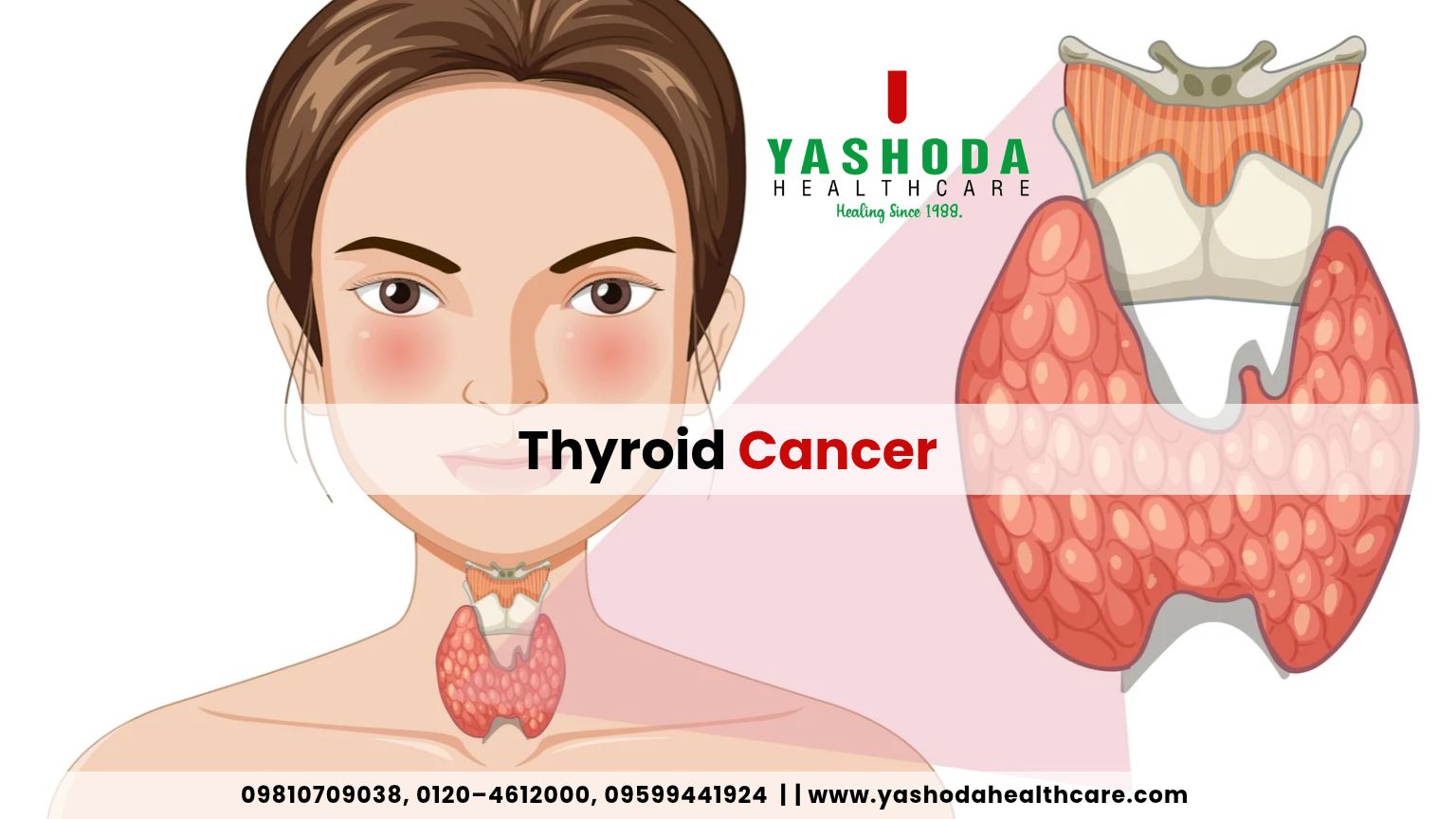
Thyroid cancer develops when abnormal cells grow rapidly in the thyroid gland (the butterfly-shaped gland in the neck). The thyroid is the gland responsible for producing hormones that regulate the body’s usage of energy. These hormones help control body temperature, blood pressure, and heart rate.
Symptoms of Thyroid Cancer
While the symptoms of thyroid cancer might be unnoticeable at first, as it grows, it starts showing signs such as:
- Swelling in the neck or a lump developing under the skin of the neck
- Changes in voice, such as hoarseness
- Difficulty swallowing
- Swollen lymph nodes in the neck
- Pain in the neck and throat
- Clothes getting tighter around the neck or throat
Causes of Thyroid Cancer
Thyroid cancer develops when the cells in the thyroid undergo changes in their DNA. These cells then multiply and accumulate to form a tumour. These tumours can grow to invade nearby tissues and metastasise to the lymph nodes of the neck, thereby spreading the cancer.
For most thyroid cancers, the exact cause is not clear, but there are certain risk factors that have been identified by doctors and health experts:
- Family history of thyroid cancer
- Low iodine intake
- Obesity
- Inherited syndromes such as multiple endocrine neoplasia, Cowden syndrome, or familial adenomatous polyposis
- Exposure to radioactive fallout from a power plant incident
- Radiation therapy for head or neck cancer
Types of Thyroid Cancer
To understand the treatment and diagnosis of thyroid cancer, it is first important to understand the different types of thyroid cancer:
1. Papillary Thyroid Cancer
This is the most common type of thyroid cancer, which mostly affects people between the ages of 30 and 50 years. Most of these cancers are small and tend to respond well to treatment, even if the cancer cells have spread to the lymph nodes in the neck. However, some of these cancers can become aggressive and even spread to other parts of the body.
2. Follicular Thyroid Cancer
This is a rare type of cancer that usually affects people over the age of 50. Follicular cancer cells do not usually spread to the lymph nodes, but some large and aggressive cancers might metastasise to other parts of the body, often to the lungs or bones.
3. Hurthle Cell Thyroid Cancer
Earlier, it was considered a type of follicular thyroid cancer, but over time, it got its own category because the cancer cells in this condition behave differently and respond to different treatments.
4. Anaplastic Thyroid Cancer
This type of thyroid cancer grows rapidly and can be difficult to treat. However, modern treatment methods can help slow down the progression of this type of cancer. It is most common in people above the age of 60 years.
5. Medullary Thyroid Cancer
This is another rare type of thyroid cancer that begins in the thyroid cells called C-cells, which produce the hormone calcitonin. When the levels of calcitonin increase in the blood, it can be indicative of medullary thyroid cancer at a very early stage.
6. Other Rare Thyroid Cancers
Thyroid lymphoma, which begins in the immune system cells, and thyroid sarcoma, which begins in the connective tissue of the thyroid, are other rare types of thyroid cancer.
Treatment of Thyroid Cancer
Once the visible signs and symptoms are identified, medical attention should be sought. Several tests can be conducted to rule out or confirm the presence of a tumour or cancer:
- Thyroid Blood Test: This test is conducted to check whether the thyroid is releasing hormones properly. Any imbalance or irregularity in its functioning may indicate the need for further tests.
- Biopsy with Fine-Needle Aspiration: This procedure may be conducted in which the doctor removes cells from the thyroid to test for cancer.
- Imaging Scans: These help detect thyroid cancer and include ultrasounds, radioactive iodine scans, CT scans, or PET scans.
Surgery is often the most common treatment for thyroid cancer. Surgery can involve either the removal of the entire thyroid gland (thyroidectomy) or the removal of only the diseased or affected part (lobectomy). Even the lymph nodes around the affected area may be removed.
Other treatment methods include:
1. Radioiodine Therapy
This therapy is recommended after surgery to kill any remaining cancer cells. It involves taking a pill orally that contains radioactive iodine. The thyroid tissue absorbs it, and the radiation destroys the diseased tissue.
2. Radiation Therapy
Some cancers cannot absorb iodine during radioiodine therapy. In such cases, external radiation therapy is recommended.
3. Hormone Therapy
Hormone therapy helps prevent any new thyroid tissue from growing back after surgery, thereby helping prevent the cancer from returning.
4. Targeted Therapy
This treatment is mostly used to treat aggressive or advanced cancers. It targets specific weaknesses in cancer cells associated with particular gene mutations.
5. Chemotherapy
Chemotherapy uses drugs to kill any remaining cancer cells in the body. It is mostly combined with radiation therapy.
Best Hospital & Doctors for Thyroid Cancer Treatment in Delhi NCR(Noida, Ghaziabad)
Yashoda Superspeciality Hospital & Cancer Institutes, Sanjay Nagar, Ghaziabad, is one of the leading hospitals for comprehensive cancer care treatment in Delhi NCR. With a network of highly skilled and experienced doctors, Yashoda Hospital, Sanjay Nagar, promises all-round patient care and rehabilitation.
Dr. (Brig.) Arvind Kumar Tyagi is the Director of Surgical Oncology and Robotic Surgery at Yashoda Superspeciality Hospital & Cancer Institutes, Sanjay Nagar, Ghaziabad. With over three decades of oncosurgical experience and having served across various Armed Forces hospitals throughout India, Dr. Tyagi’s experience speaks volumes about his expertise. His specialisations include head and neck oncosurgery, thoracic oncosurgery, gastrointestinal oncosurgery, etc.
Dr. Adarsh Kumar, Senior Consultant, Surgical Oncology & Robotic Surgery, comes with 10 years of experience in the field. His expertise lies in surgeries of the neck, head, breast, and gastrointestinal system, etc. He has an impeccable command over surgical oncology procedures.
For bookings or appointments, please contact us at – 9810709038, 0120-4612000.